The question
For my F5 biology project, I investigated the role of yeast in making white sugar sponge cake. I wanted to explain how a liquid rice-flour batter develops bubbles and, after steaming, a porous internal structure.
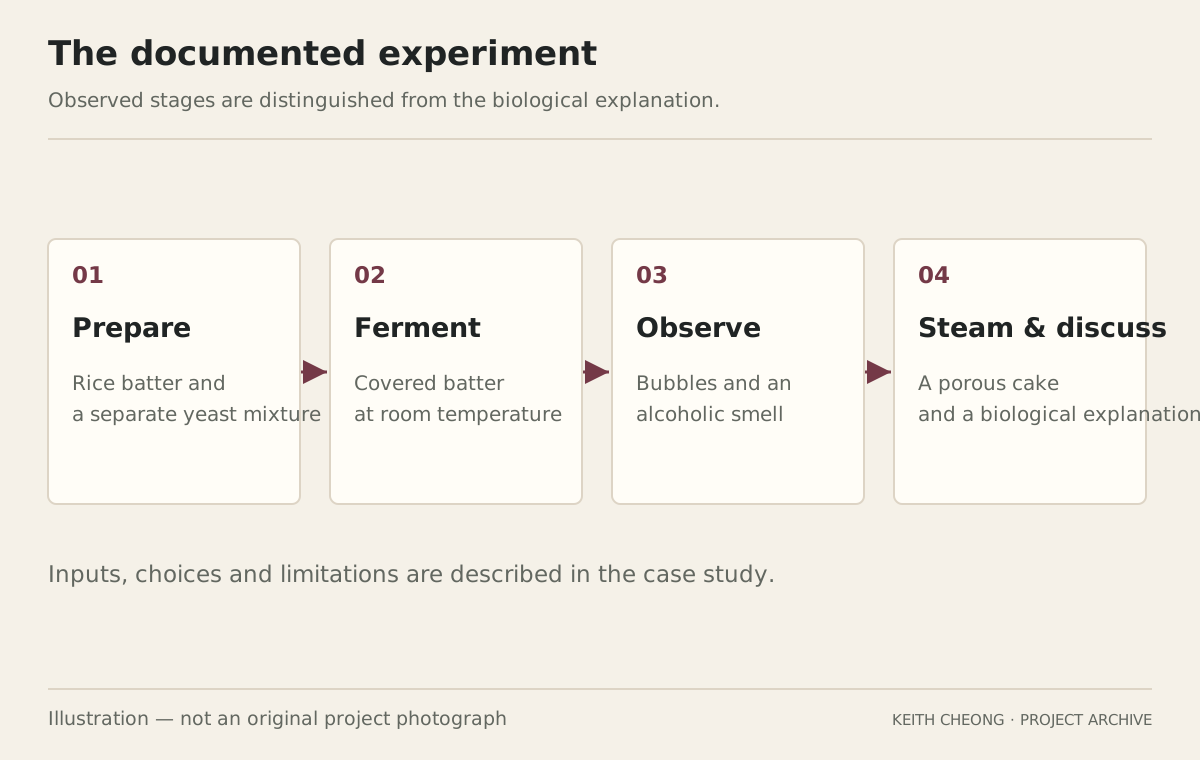
I made the cake and documented it before fermentation, after fermentation and as a finished product. The notes describe visible changes rather than a controlled comparison between several recipes.
The recorded method
The archive describes mixing rice flour, sugar and hot water, preparing a separate yeast mixture, then adding it to the batter. The batter was covered for fermentation and later transferred to an oiled tray for steaming.
The temperature of the batter when yeast was added was not recorded. That is a limitation of the original method, because temperature affects yeast activity. The quantities and times above are a historical record, not a validated recipe or a complete controlled protocol.
Observation and explanation
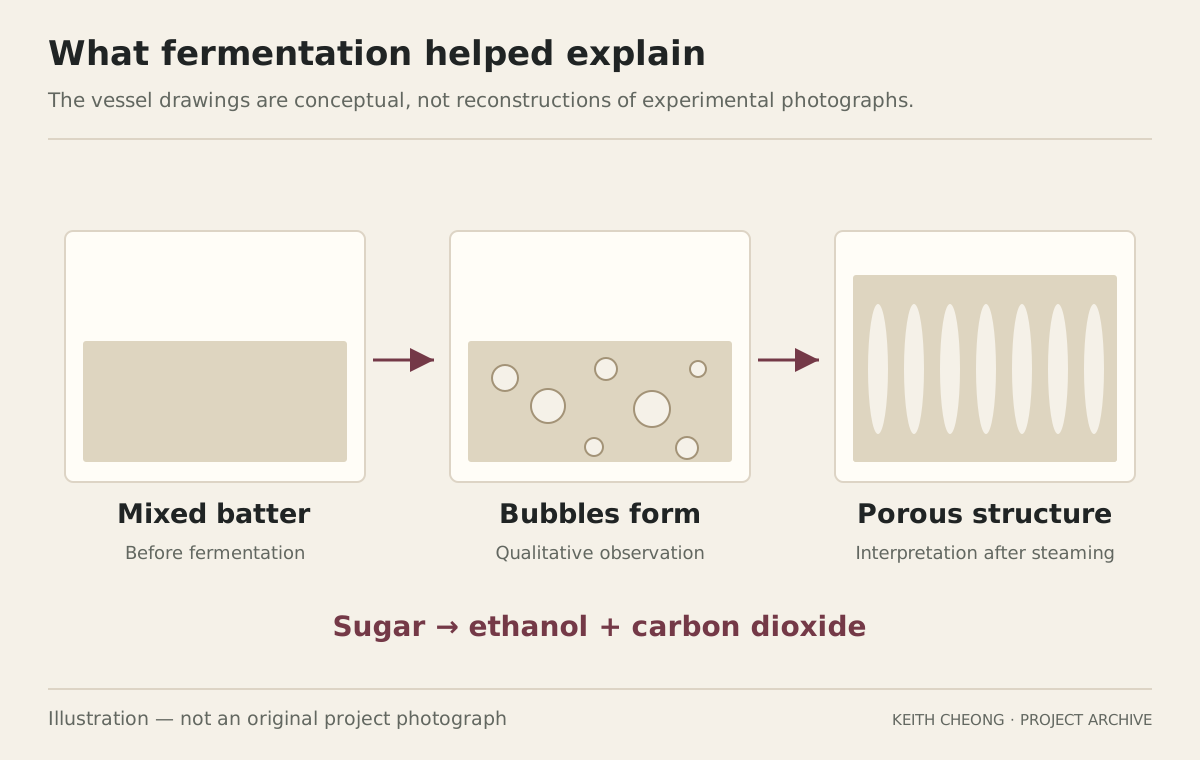
After fermentation, I observed many bubbles and noticed an alcoholic smell. These observations were consistent with fermentation, but I did not measure the volume of carbon dioxide or the concentration of ethanol.
Baker's yeast can convert sugars into ethanol and carbon dioxide. Carbon dioxide contributes to gas bubbles in the batter. The interpretation of the cake's pores is that gas bubbles expand and become enclosed as the rice-starch structure sets during heating. This is a mechanism-based explanation, not a quantified result from this experiment.
Simplified overall alcoholic-fermentation equation; it does not report a measured yield.
What a follow-up could improve
A stronger follow-up would record batter temperature, keep the recipe and steaming conditions constant, and compare defined fermentation times. Repeated trials and a simple measure of batter expansion would make the observations easier to compare.