Opens the current public game. A keyboard is useful for the documented controls.
Original recordPlayable prototype available
This presentationCase study + existing live demo
The archive describes a Macau-themed direction. The currently available public prototype is titled Zen Strike — Kung Fu Arcade. These are distinguished rather than treated as identical feature lists.
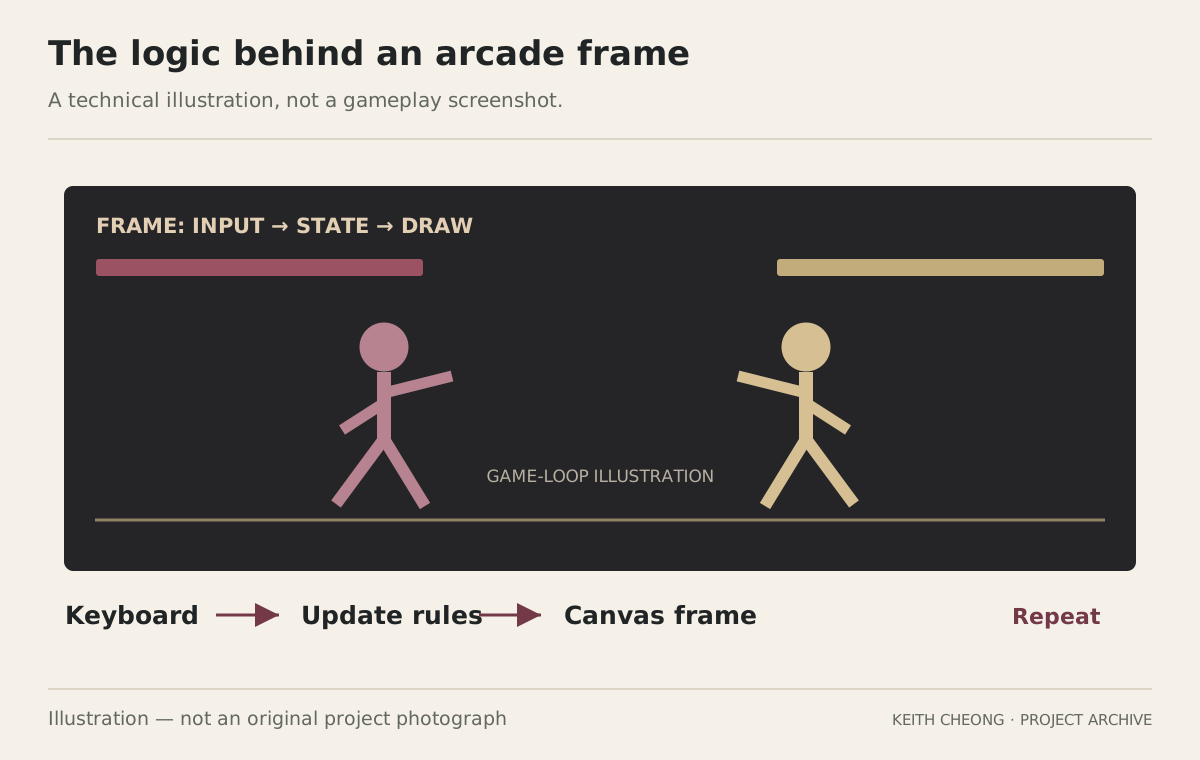
An overview of the idea and its boundaries.Illustration — not an original project photograph
中文摘要
Zen Strike 網頁格鬥遊戲
Zen Strike 已有網頁遊戲原型,使用 Canvas 繪圖與 JavaScript 遊戲循環。我的項目記錄曾把澳門文化與地標列為設計方向;目前公開版本以 Kung Fu Arcade 呈現,因此本頁不把尚未核實的地標內容當成現成功能。
01
The original idea and the current version
My archive describes a 2D browser game with an interest in Macau's local culture. It combines programming with visual and interaction design.
The public demo available during this review is called Zen Strike — Kung Fu Arcade. Its interface presents Tai Chi and Wing Chun fighters and several play modes. This page describes the demonstrable game structure without assuming that every earlier cultural-design idea is present in that build.
02
A loop that keeps the game moving
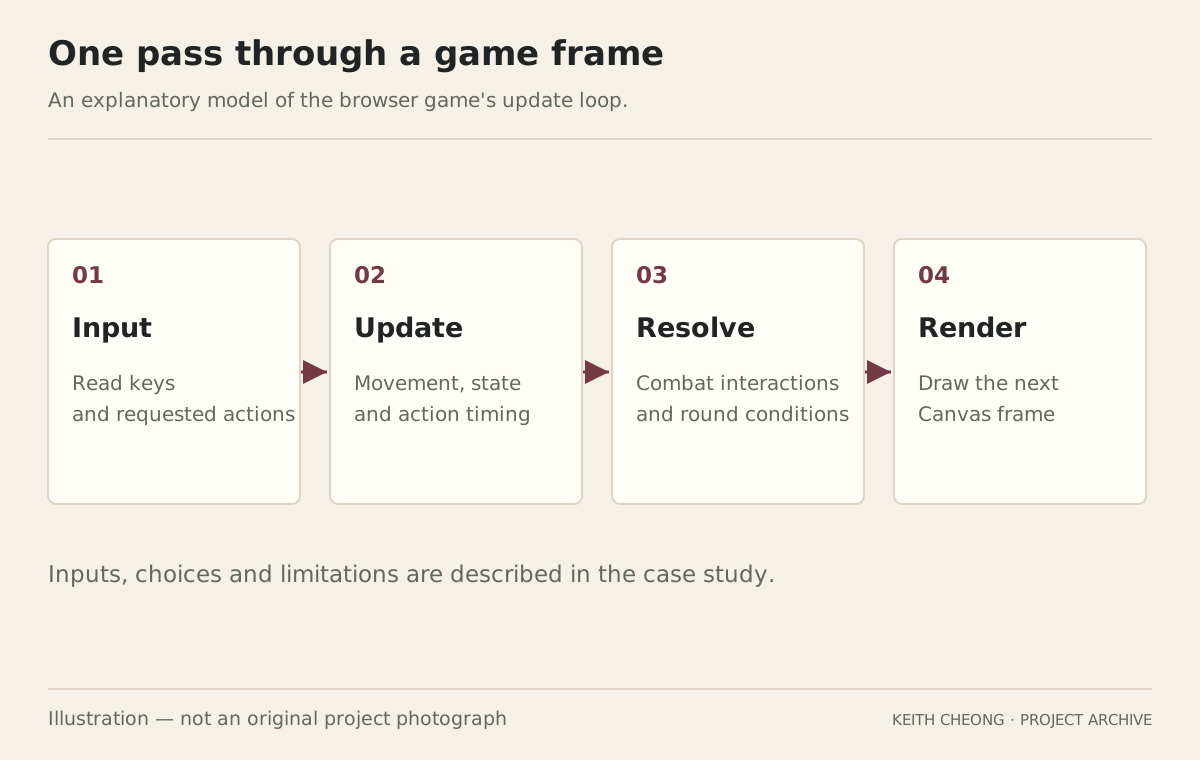
The game reads input, updates the world and draws the next frame. The delivered browser code uses a Canvas 2D context and requestAnimationFrame, connecting keyboard state to movement and combat behaviour.
The public interface and code include light and heavy attacks, combinations, blocking and two-player keyboard controls. Timing and clear feedback matter because players need to understand the result of an input immediately.
03
What makes it a useful learning project
A game brings several kinds of logic together: state changes, drawing, input handling and rules about what can happen next. A visible result makes mistakes easier to notice, but it also makes inconsistent behaviour very noticeable.
The diagrams here explain that structure. They are newly drawn illustrations, not screenshots or proof of a particular gameplay result. The linked original demo is the place to see the actual visual design.
04
Scope of this case study
This page documents the existing prototype rather than recreating the full game inside the portfolio. It does not claim measured frame rates, a released commercial product or a particular contribution split that the archive does not establish.
An explanatory model of the browser game's update loop.Illustration — not an original project photograph
The current public title, controls and Canvas/React implementation were checked separately from the historical archive.
About this record
Project history comes from my supplied My Project Archive. The current demo's public interface and delivered code were reviewed to distinguish its present features from earlier plans.
All diagrams on this page are newly made explanatory illustrations. They do not replace original photographs, test results or source files.